How Long Does Braces Treatment Take? An Orthodontist Explains
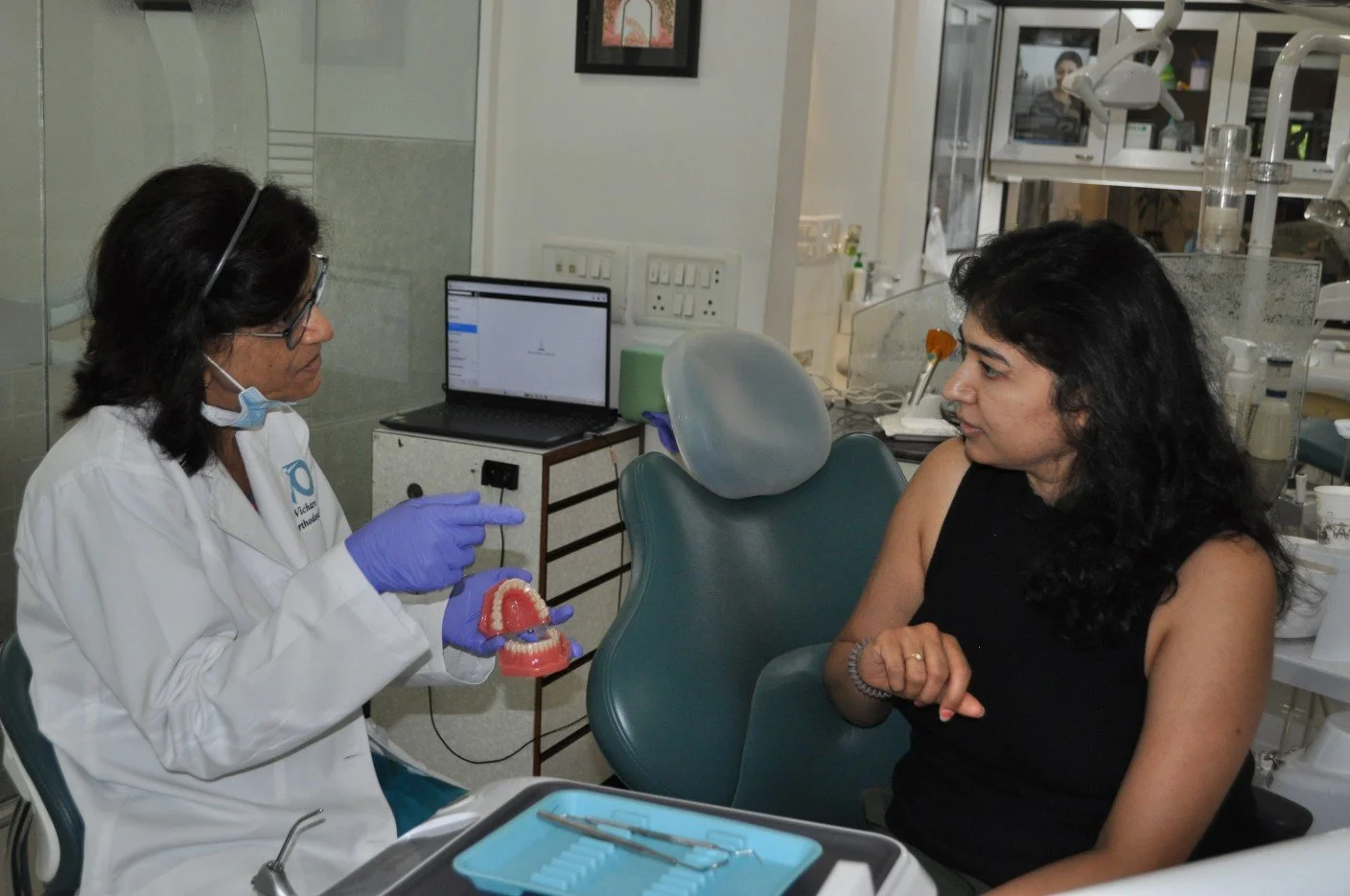
“How long will this treatment take?”
It is one of the first questions patients ask when they visit an orthodontist. The answer to this question is not always straightforward. There is no single treatment timeline that applies to everyone.
How long orthodontic treatment takes depends on three main factors:
The individual problem
The age at which the patient begins treatment
How much correction is required
Rather than focusing only on “How quickly can my braces come off?,” It is much more important to understand what needs to be corrected and what a realistic treatment timeline looks like for you.
How long do braces usually take?
The duration of orthodontic treatment can vary significantly from one patient to another. For a relatively minor problem, treatment may be completed in approximately 6 to 8 months. More conventional treatment with braces can take up to around two years. And in certain cases, particularly when treatment involves growth or habit correction, the overall treatment journey may extend over several years. The exact duration depends on the individual patient and the problem that needs to be corrected. Some orthodontic cases are relatively straightforward. Others may involve several stages of treatment, particularly in growing children. Two people may both wear braces, but the reason they need treatment, and therefore the length of treatment can be completely different.
Why does the length of orthodontic treatment vary from person to person?
The first reason is simple: every orthodontic problem is different.
The treatment timeline depends on:
What exactly needs to be corrected
The patient's age
How much correction is required
Whether treatment needs to work alongside the patient's growth
Whether a habit needs to be corrected first
Whether treatment is being carried out in multiple stages
There are also cases where the treatment goal is not simply to achieve a 100% correction. Orthodontic treatment has limitations, and what is possible or advisable varies from one patient to another. This is why treatment cannot always be planned according to a fixed timeline before the individual problem has been properly assessed.
Can some orthodontic problems be corrected faster?
Yes. The time required for orthodontic treatment depends largely on the complexity of the problem being corrected. Minor alignment issues may sometimes be treated in a shorter period, while more complex concerns involving significant crowding, spacing, bite correction, or multiple tooth movements naturally require more time. This is why comparing your treatment timeline with someone else’s may not always be helpful. Two people can have seemingly similar concerns but require very different treatment approaches based on their teeth, bite, and overall orthodontic needs. Your treatment plan is designed specifically for your smile and the corrections you need to achieve a healthy, stable result. So, instead of asking only, “How quickly can my teeth be straightened?” it is equally important to understand what your treatment is designed to achieve and why it may take the time it does.
Why can some orthodontic treatments take several years?
Certain orthodontic treatments involve more than one stage. For example, treatment may be planned around a child's natural growth. In other cases, the orthodontist may first need to address a habit before moving on to further correction. These treatment journeys can sometimes extend to three or four years, or even longer.
But, there is an important clarification: A treatment journey lasting several years does not mean that the patient will have braces in their mouth for the entire duration. Different phases may involve different appliances and different treatment goals.
When are braces introduced in a longer treatment plan?
The timing of braces depends on what the orthodontist is trying to achieve at each stage of treatment. In a growing child, for example, an orthodontist may first use an appliance to address a habit, guide jaw development or create the right conditions for the teeth to develop. Braces may be introduced later, when the permanent teeth are in place and detailed tooth and bite correction is required. The exact timing varies from patient to patient and is planned according to their growth, dental development and treatment needs. This is why the overall treatment duration and the duration of braces treatment may not always be the same. Your orthodontist can explain what each phase is intended to achieve and when braces are likely to be needed.
Can a child's growth affect how long treatment takes?
Yes.
For certain orthodontic problems, treatment may involve working with the patient's natural growth. A growth spurt is a period of accelerated growth. When treating children, orthodontists may identify situations where this natural growth potential can be used as part of the treatment plan. For example, if there is a difference in how the upper and lower jaws relate to each other, treatment may be planned around the child's growth. The orthodontist is not trying to create or stop growth. Instead, the aim is to use the child's existing growth potential alongside braces or other appliances. Because growth happens over time, treatment plans that involve these stages may naturally take longer than a straightforward tooth movement.
What happens after the braces come off?
This is the second question many patients ask, “What happens after this?” Orthodontic treatment does not simply end the moment the braces are removed. After the active correction is completed, the patient may need retainers as part of the next stage of treatment. In longer or staged treatment plans, retainers come after the required correction has been achieved. This is one reason it is useful to think of orthodontic care as a treatment journey, rather than simply the number of months you spend wearing braces.The journey can involve different appliances at different stages, depending on what needs to be achieved.
Why does wearing a removable appliance properly matter?
One of the most important factors in certain orthodontic treatments is how consistently the patient wears their appliance. With braces, the brackets are attached to the teeth. They cannot simply be removed whenever the patient wants. Removable appliances are different. A patient may take them out while eating, going to school or attending a social event. Sometimes, the appliance may be forgotten or left at home. Someone may even fall asleep without putting it back in. But removable appliances need to be worn as prescribed because they are designed to apply force to the teeth. When the appliance is removed, that force is no longer being applied. Let's understand this using a simple example: Imagine rolling a ball up an inclined hill. If you suddenly stop, the ball can roll back down. When you start again, you may have to push it back up.In a similar way, taking a removable appliance out too frequently or for too long can affect the progress of treatment. This is why patients are advised to wear their removable appliances exactly as prescribed and for the maximum recommended duration.
Can poor appliance compliance affect treatment time?
It can affect how efficiently the treatment progresses. But orthodontic treatment relies on the appliance doing its job consistently.The orthodontist's role is to plan the treatment and provide the right appliance. The patient's role is to use that appliance as instructed. This is especially important with removable appliances, where the success of the treatment depends heavily on whether the patient actually wears them.
The bottom line
There is no single answer to the question, “How long do braces take?”
Orthodontic treatment is individual. Some patients need only a short period of correction. Others need a more conventional course of braces. And some may have a longer treatment journey involving growth, habit correction and different types of appliances. The key is to understand that time is only one part of the treatment plan.
During your consultation, your orthodontist can explain:
What problem is being corrected
Which appliances may be required
Whether the treatment will happen in stages
How long the active treatment may take
What happens after braces
How your cooperation with removable appliances can affect treatment progress
The treatment timeline is based on the individual patient, not a standard number of months. Because when it comes to orthodontic treatment, the goal is not simply to finish as quickly as possible. It is to follow the treatment plan that is right for your specific orthodontic needs.